
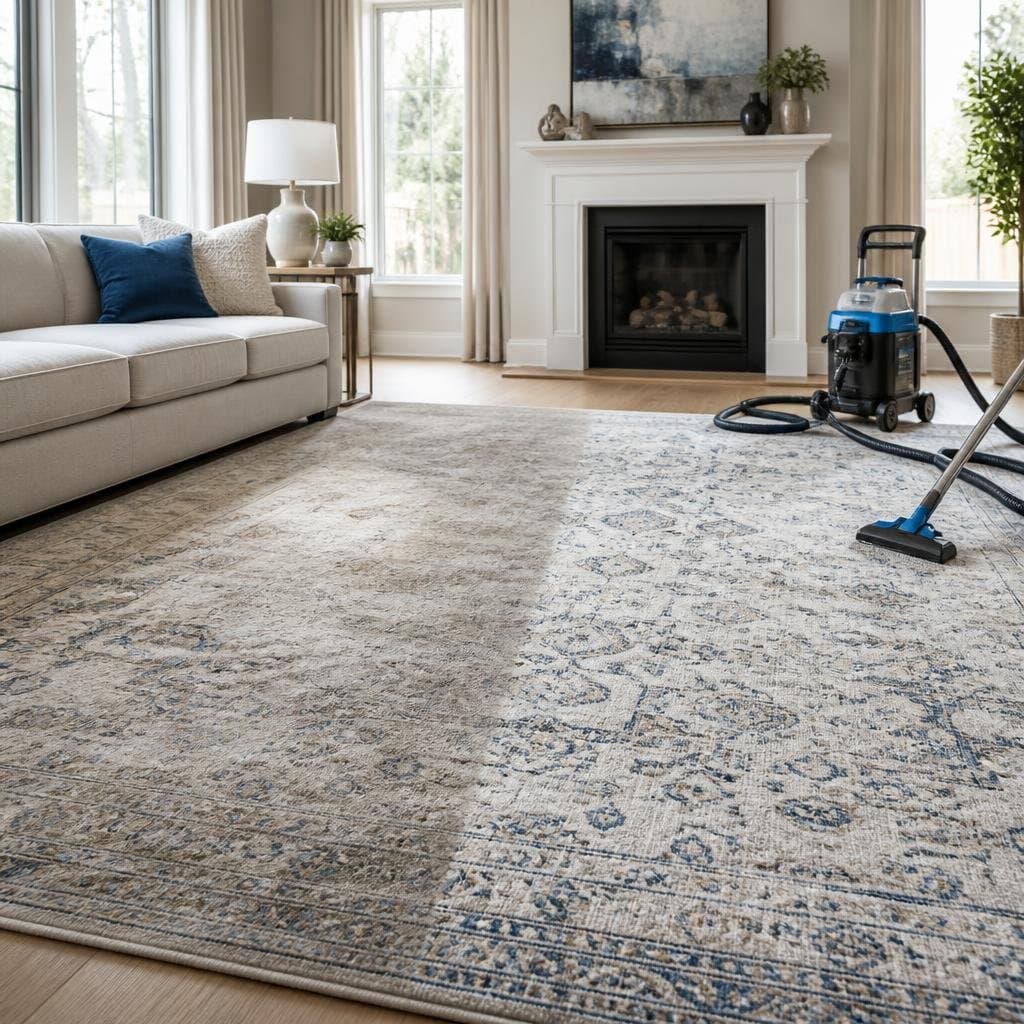
Walk into almost any Rio Rancho home and you will find a rug doing a lot of quiet work: softening a tile floor, warming up a living room, or anchoring the furniture in place. Yet not all rugs are built the same, and that is why rug cleaning in Rio Rancho is never a one-size-fits-all job. An inexpensive machine-made area rug and a hand-knotted Oriental rug may look similar from across the room, but they are made from different fibres, coloured with different dyes, and put together in very different ways.
Knowing which kind of rug you own — and how its cleaning needs differ — helps you protect it, keep it looking good for longer, and avoid the kind of well-meaning home cleaning mistake that leaves colours faded or fibres stiff. Here is a clear, practical guide to the differences, and to the everyday care that suits each type.
Why Rug Cleaning in Rio Rancho Is Not One-Size-Fits-All
Rio Rancho homes face a particular set of challenges. High-desert dust blows in through doors and windows, settles deep into rug fibres, and builds up even in homes that are vacuumed regularly. In neighbourhoods like Cabezon, Enchanted Hills and Northern Meadows, many homes also mix hard floors with large rugs, so rugs catch the dust, pet hair and foot traffic that would otherwise spread across the house.
A good cleaning approach starts with the rug itself: what it is made of, how its colours were set, how tightly it is woven, and how old or delicate it is. A method that is perfectly safe for a sturdy synthetic rug can be far too harsh for a wool rug with natural dyes. That is the core difference between area rugs and Oriental rugs, and the reason a careful cleaner treats them differently from the start.
What Makes an Area Rug Different?
Most area rugs sold today are machine-made. They are often woven from synthetic fibres such as nylon, polyester or polypropylene, though cotton and wool blends are common too. They come in a huge range of sizes, patterns and prices, and they are designed to be practical: easy to move, easy to place, and generally more forgiving of everyday life.
Because many area rugs use synthetic fibres and colourfast dyes, they usually tolerate a more straightforward cleaning process. Dirt tends to sit on or near the surface, and the backing and edges are often sturdier and less likely to fray. That does not mean every area rug can be treated the same way — a thick wool area rug still needs gentler handling than a flat-weave synthetic one — but on the whole, area rugs are the more hard-wearing half of this comparison.
What Makes an Oriental Rug Different?
Oriental rugs is a broad term for hand-knotted rugs made in traditional styles, often from wool, silk or a blend of the two. Each knot is tied by hand, which is why these rugs can take months to make and why their patterns are so detailed. Many use natural or vegetable-based dyes, and their fringes, backing and edges are part of the rug’s structure, not just decoration.
That craftsmanship is also what makes Oriental rugs more delicate to clean. Natural dyes can bleed if they get too wet or are exposed to the wrong cleaning solution. Wool fibres can shrink or felt if they are agitated too aggressively. Fringes can tangle or break. An Oriental rug that has been in a family for years may also have areas of wear — thin spots, faded patches or older repairs — that need to be worked around rather than scrubbed over.
How Rug Cleaning in Rio Rancho Changes by Rug Type
For a professional cleaner, the differences show up at every stage of the job:
- Inspection first. An area rug is usually checked for fibre type, stains and general wear. An Oriental rug gets a closer look: dye stability, knot density, fringe condition and any previous repairs all shape the plan.
- Dust removal. Both types benefit from thorough dry dust removal before any wet cleaning, but a hand-knotted rug needs a gentler touch so its knots and backing are not stressed.
- Cleaning method. A sturdy synthetic area rug may suit a more direct cleaning method, while a wool or silk Oriental rug usually calls for a lower-moisture, pH-balanced approach that protects its dyes and fibres.
- Drying. Area rugs often dry fairly quickly with good airflow. Oriental rugs need careful, even drying — laid flat, away from direct heat — so they keep their shape and do not develop musty odours or dye transfer.
- Fringe and edge care. The fringes on an Oriental rug are cleaned separately and by hand where needed, while most area rugs have bound edges that simply need a careful finish.
If you are unsure which type of rug you have, look at the back: a hand-knotted rug usually shows the same pattern on the back as on the front, while a machine-made rug often has a backing material or a much less distinct reverse pattern. When in doubt, it is always safer to treat the rug as the more delicate of the two until a professional has looked at it.
Everyday Care That Suits Both Types
Between professional cleans, the basics are the same for both kinds of rug, with a little extra caution for Oriental rugs. Vacuum regularly, and vacuum both sides of a lighter rug occasionally so dust does not settle into the backing. Rotate the rug every few months so wear and sunlight are spread evenly, and use a rug pad underneath — it stops slipping, cushions the fibres and keeps dust from grinding into the floor below.
For spills, blot — never scrub. Press a clean, dry cloth onto the spill, work from the outside in so the stain does not spread, and keep the area as dry as you can. Scrubbing pushes dirt deeper into the fibres and can distort the pile, and on an Oriental rug it can also disturb the dyes. If a stain does not lift with gentle blotting and plain water, leave it for a professional rather than reaching for a strong household cleaner, which can set the stain or strip colour.
During monsoon season, when mud and extra dust come in on shoes, a doormat and a shoes-off habit near the door will do more for your rugs than any amount of spot cleaning afterwards. It is a small routine that pays off across the whole house, from the entryway rug to the living room centrepiece.
Signs Your Rug Needs Professional Attention
Some signs are easy to spot: a dull, grey cast that vacuuming no longer lifts, a lingering odour even after airing, visible traffic lanes where feet pass most often, or stains that have survived your best home efforts. Others are quieter — a rug that feels stiff or gritty underfoot, edges that are starting to curl, or colours that look uneven from one side to the other.
Pet homes often notice the change first. Pet hair, dander and the occasional accident all work their way deep into rug fibres, and a rug can look clean on the surface while holding far more underneath. If you have pets and a much-loved rug, regular professional care is what keeps both the rug and the room smelling fresh.
Choosing the Right Care for Your Rug in Rio Rancho
The simplest rule is this: match the cleaning to the rug, not the other way round. A hard-wearing area rug can take a practical, thorough clean. A hand-knotted Oriental rug deserves a slower, more careful approach that respects its fibres, dyes and craftsmanship. Either way, a rug that is cleaned properly lasts longer, looks better, and makes the whole room feel fresher.
If you would like help with your own rugs, a professional rug cleaning in Rio Rancho visit can take a proper look at what you have and clean it the right way for its type. And if the rest of the house needs attention too, professional carpet cleaning in Rio Rancho can bring wall-to-wall carpets back to life alongside your rugs. For a friendly chat about your rug, call Ultra Fresh Cleaning at (505) 578-3294 — we will be happy to help you keep your rugs looking their best.